
Back in 2023, Microsoft founder Bill Gates predicted that in the next five years, AI agents would take over all unnecessary apps and help you with every aspect of your work. He envisioned a future where an intelligent agent in AI will be able to process and respond to the user to complete the command given. “In the next few years, they will utterly change how we live our lives, online and off,” he said.
Today, you will find AI in every other tool that makes your job easy. For example, virtual assistants like Siri and Alexa can help you get all the information in real time. AI tools are found in healthcare, IT, transportation, supply chain, and other industries. To add more, AI agents are making things accessible.
This article will take you through what is an Agent in AI, its types, structure, and other aspects to help you learn the complex environment of AI.
What are AI Agents?
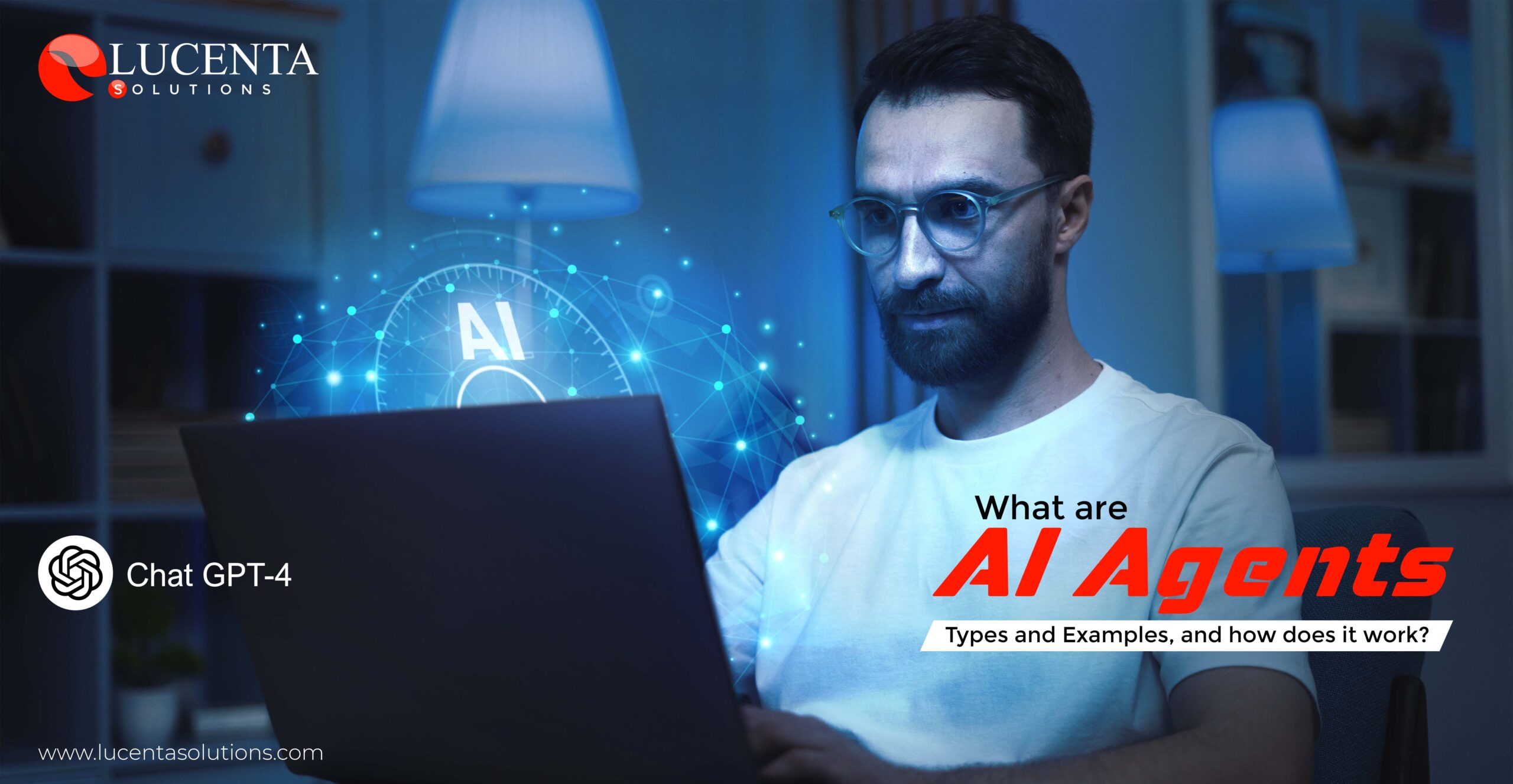
An artificial intelligence (AI) agent is a well-designed tool that helps to gather information and use that data to carry out specific tasks aimed at achieving specific goals. When a user comes up query with the chatbot or any other tool, the AI agent autonomously takes effective actions to reach those goals. For instance, a voice assistant tool like Alexa receives a command from the user. The tool interprets its input and gives out the solution in the required form.
When a user comes up query with the chatbot or any other tool, the AI agent autonomously gives effective actions to reach those goals. For instance, a voice assistant tool like Alexa receives a command from the user. The tool interprets its input and gives out the solution in the required form.
Besides, these AI agents tackle complex tasks across various enterprise applications such as software design, IT automation, and conversational support. They leverage advanced natural language processing capabilities of large language models (LLMs) to understand user input in step-by-step manner, and decide when to invoke external tools or systems as needed.
Key Principles Defining AI Agents?
AI agents are considered rational agents, which is also a type. This means that these tools come up with the result according to the data seeded. They interact with their environment through physical or software-based interfaces.
For instance, a robotic agent gathers input through sensors, while a chatbot processes user queries as its data source. The AI agent then analyzes this input to make an informed decision, using the information to predict and select the most suitable actions that align with its assigned objectives.
What are the Types of Agents in AI?
Simple Reflex Agent
A simple reflex agent is an AI system that operates based on predefined rules, making decisions solely in response to the current situation without taking past events or future consequences into account.
This type of agent is best suited for environments having consistent rules and clear, uncomplicated actions, as it relies entirely on immediate input to react and respond.
Example-
A rule-based system designed for automated customer support can detect keyword related to password resets in a customer’s message and automatically generate a predefined response with step-by-step instructions on how to reset the password. You may have come across this situation when resetting the password of your bank account or email ID.

Image source- IBM
Model-based Reflex Agent
By maintaining an internal state, this agent monitors and remembers changes in the environment over time, enabling it to make more context-aware and informed decisions. Unlike simple reflex agents, they don’t rely solely on current inputs but also consider past events to understand complex scenarios, adapt to evolving conditions, and improve overall performance in dynamic environments.
Example
A robot vacuum cleaner uses sensors and internal memory to map out the layout of a room, including the location of furniture and obstacles. By maintaining an internal state, it remembers these details across cleaning sessions, allowing it to navigate more efficiently and avoid repeated collisions or missing spots.

Image source- IBM
Goal-based Agents
Goal-based agents are a type of AI agent that utilize environmental information to pursue and achieve defined objectives. They rely on search algorithms to determine the most effective path or sequence of actions to reach their goals within a specific context.
earn how AI agents are transforming real estate with What is Agentic AI in Real Estate
Often referred to as rule-based agents, these systems operate by following a set of predefined rules, making decisions to take action based on certain conditions that align with their intended outcomes.
Example
One of the best examples is the Google Bard or Gemini, which is not just a goal-based agent but also a learning agent. As a goal-based agent, the objective of Bard is to offer solutions as per user queries. The action depends on supporting users in locating the information they need.

Image source- IBM
Utility-based Agents
Utility-based agents are AI systems that make decisions by aiming to maximize a utility function, working as per the value of potential outcomes. These agents evaluate possible actions and select the one with the highest expected utility, enabling them to handle complex, uncertain environments with greater flexibility and adaptability.
Example:
Self-driving cars, like those developed by Tesla, function as utility-based agents. They continuously assess multiple factors—such as traffic conditions, safety, fuel efficiency, and passenger comfort—to determine the most optimal route and driving behavior at any given moment.

Image source- IBM
Learning Agent
An AI learning agent is a software-based system capable of learning from past experiences to enhance its performance over time. It begins with limited or basic knowledge and gradually improves its decision-making and actions by adapting through machine learning techniques. There are four different components-
- Critique
- Learning Element
- Performance Element
- Problem generator
Example
The best example of a learning agent is Netflix, which comes up with recommendations based on users’ search behaviour.

Image source- IBM
Hierarchical Agents
These agents structure their decision-making process across different levels of abstraction. It starts with the higher levels who manage planning and control of the development process, lower level focuses on the execution and result. This divide in the project handling allows developers to seamlessly work on complex projects and manage sub-tasks.
Example
AutoGPT is the best example of hierarchical agents in AI, where a top-level agent sets high-level goals and delegates subtasks to lower-level agents. Each sub-agent specializes in completing a specific task, enabling complex problem-solving through organized task decomposition.

Image source- geeksforgeeks
Multi-agent systems
In this approach, multiple autonomous agents interact to achieve shared objectives. Depending on the scenario, they may collaborate or compete, collectively solving complex problems more effectively than a single agent operating independently.
Example
An autonomous traffic management system is the best example here, where multiple self-driving cars or agents coordinate for better management of traffic. Here, AI plays a major role in automating communication for efficient transportation.

Image source- IBM
Rational Agent
This agent considers realistic models of the thinking process of people. It incorporates preferences for beneficial outcomes and the capacity to learn from experience. It is quite similar to a human-like decision-making process and is widely applied in game theory and decision theory to solve real-world problems using AI.
Example
A self-driving car analyzes traffic patterns, road conditions, and surrounding vehicles in real time to make informed decisions—like changing lanes or adjusting speed—to ensure a safe and efficient journey.

Image source- geeksforgeeks
Understanding the Structure of Agent in AI
Getting insight into the structure of an agent in AI is essential for recognizing how intelligent agents perceive their environment, process information, and take actions. Different key components work together to make intelligent decisions:
1. Sensors (Perception)
Sensors serve as the agent’s important organ, giving away the information to the external environment. They allow the agent to gather real-time data that informs its decision-making process.
Some of the best examples are robots, sensors that may include cameras, microphones, infrared detectors, or sonar equipment to detect motion, location, and surroundings.
2. Percept Sequence
The percept sequence is the complete history of everything the agent has sensed or observed up to a given point in time.
This historical data serves as a memory base that enables the agent to recognize patterns, maintain context, and make more informed decisions rather than reacting blindly to each new input.
For instance, in a virtual assistant, remembering a user’s past requests helps the agent tailor its future responses more accurately.
3. Decision-Making Component (Function)
The core intelligence of the agent lies in its decision-making mechanism, often referred to as the agent function. This component interprets the current percept or percept sequence and determines the most appropriate action to take.
For example, an AI chatbot or tool like SIRI uses natural language processing (NLP) to understand a user’s query and relies on trained models to generate suitable responses.
Knowledge-Based Agent in AI
Knowledge-based agents (KBAs) are a type of artificial intelligence system that makes intelligent decisions by utilizing previously stored knowledge. They operate based on a structured knowledge base—a collection of facts, rules, and logical relationships—and use an inference engine to analyze this information and make predictions or decisions based on logical reasoning. The knowledge-based agent in AI is divided into three different categories-
Knowledge Base
The knowledge base acts as the central repository where an AI agent stores structured facts, rules, and relevant information required for intelligent reasoning. For instance, in a medical diagnostic system, the knowledge base might include relationships between symptoms, diseases, and recommended treatments.
Inference Engine
The inference engine falls under the reasoning component of a knowledge-based agent. It processes the data stored in the knowledge base and applies logical rules to come up with the solution. For example, given a set of symptoms, the inference engine can deduce possible medical conditions and suggest further diagnostic steps or treatments.
Sensors
Sensors are used by the agent to observe and collect data from its environment, providing real-time input for decision-making. In the case of a robotic agent, sensors might detect nearby obstacles, while actuators control the robot’s movements to navigate without any hindrance.
Real World Applications of AI Agents
Below are few of the real-world examples of intelligent agent in AI:
Gemini:
Gemini AI is Google’s advanced large language model (LLM), developed using reinforcement learning techniques inspired by AlphaGo. This model improves its problem-solving abilities by receiving rewards for correct actions and adjustments for errors. Through this feedback-driven approach, Gemini can learn and refine its behavior autonomously, adapting to tasks without direct human intervention.
AI Sandbox:
Several entities including Google introduced the AI Sandbox; a creative testing ground designed for advertisers to experiment with generative AI tools. This platform offers features such as generating alternative ad copy, creating diverse background visuals, and automatic image cropping. It offers a secure environment for developers and creative users to mitigate privacy and data security.
Final Take
Understanding what is an agent in AI gives us insight into how machines can perceive queries and give out the result using an intelligent interface. From basic reflex agents to advanced knowledge-based systems, the core aim is to replicate human-like intelligence in decision-making, problem-solving, and task automation.
As AI technology advances, these agents are expected to become increasingly sophisticated, help in working on complex scenarios, and collaborate seamlessly with humans and other AI agents.